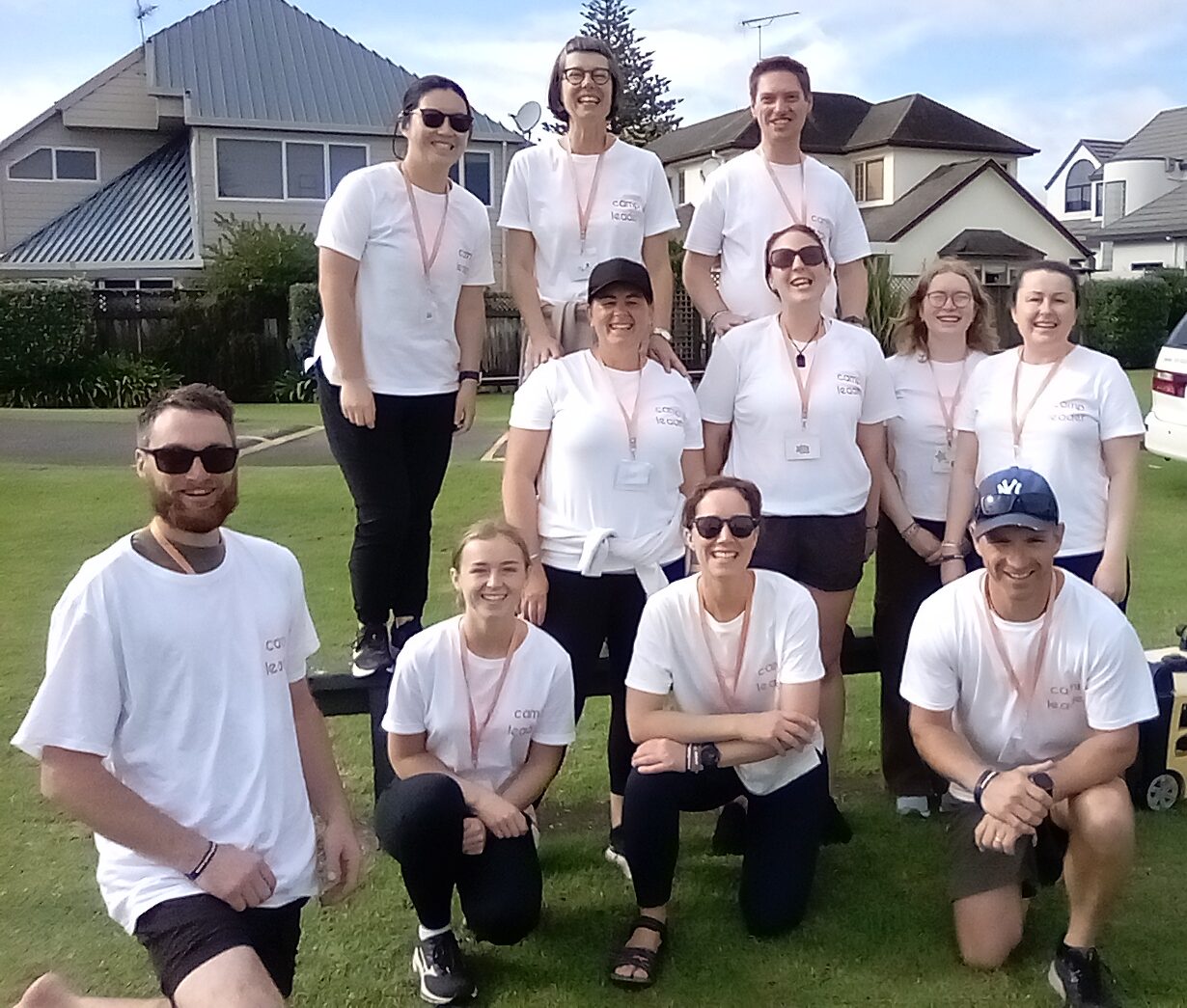
This research study, conducted as part of my PhD programme of studies, and supervised by Dr Phoebe Macrae, Dr Nicola Stock, and Tika Ormond involved running a nationwide 3-day, 2-night youth camp for people aged 10-18, held in Auckland in April 2024. The camp was designed and delivered in partnership with Cleft New Zealand, and contained many exciting events including laser tag, kayaking, rock climbing and bubble football (soccer), team-building activities such as raft-building and flying foxes, as well as a motivational talk and Q&A from Sam Thomson, and much, much more!
Thanks to a grant from Lotteries Health Research, all costs associated with attending the camp (including flights, transport, accommodation, food, and activities) were covered for the 27 campers, and 11 camp leaders, which greatly reduced barriers to attending – we had people come from as far North as Whangarei, and as far South as Invercargill join us at camp!
In addition to designing and delivering the camp, this study evaluated the impact of the camp for people who attended using quantitative, standardised measures, and qualitative focus group data. The study found that many people who attended camp were already well-adjusted, but that those who scored below average on self-esteem and sociability prior to the camp, saw improvements over time. Participants overwhelmingly reported camp to be beneficial and that they would like similar events to be offered in future.
This article supports camps and holistic youth programme interventions for children and adolescents with cleft and other craniofacial conditions, and encourages that these be for the community and by the community. A series of practical recommendations are made to support charity organisations/support groups, health teams, and research teams to support similar events in future. The resources developed for this camp have also been made freely available to support others with developing similar future events. Recommendations for future research, and ongoing evaluation of community-led events are provided.
Thank you to all the young people and adults with cleft, clinicians, and student clinicians who participated in this study. Thank you to the Camp Leaders, University of Canterbury staff, and Cleft New Zealand volunteers for their support of the study, and to Willow Park Christian Camp in Auckland for accommodating us so expertly. A full list of acknowledgements are presented within the article.
This article is available open access (free of charge). Read the article here.
Supplementary materials are available here.
Discover more from Kenny Ardouin
Subscribe to get the latest posts sent to your email.

 Kenny Ardouin
Leave a comment