
I have recently returned to Aotearoa after six informative, insightful weeks throughout the UK and Europe sharing knowledge and findings from our UC Cleft Research Centre with esteemed colleagues and counterparts from across the world. The Fellowship opportunity provided for many excellent experiences to collaborate with different groups, all of whom have a shared interest in making the world a better place for people born with cleft/craniofacial conditions or other visible difference conditions.
I would like to thank The Royal Society of New Zealand Canterbury Branch and the Claude McCarthy Fellowship fund for their financial support of my trip, as well as the Centre for Appearance Research at the University of the West of England for their logistical support. These opportunities were not only of great benefit to my PhD study, but also were a valuable opportunity for sharing the work that has arisen from my PhD, and networking with like-minded colleagues. Please see below additional detail on each of the research and conference activities that I participated on throughout the fellowship.
Cleft Lip and Palate Association (CLAPA) Adults’ Conference – Saturday 8 June 2024, London, UK
This one-day conference provided an opportunity to be present at a conference devoted to adults with lived experience of cleft from across the UK for a series of informative discussions with UK cleft-team health professionals from several disciplines including Speech Language Therapy, Dentistry, and Clinical Psychology, alongside talks and research workshops led by people with lived experience.
Face Equality International (FEI) Forum – Monday 10 June 2024, Bristol, UK
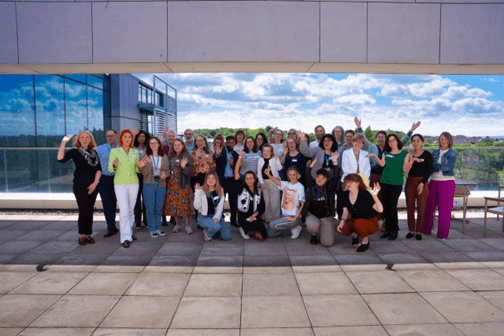
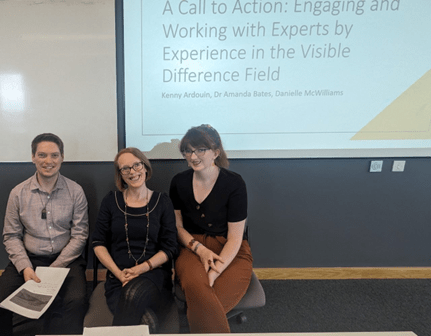
This one-day event held at the Centre for Appearance Research immediately prior to the Appearance Matters 10 conference provided an opportunity to network with researchers, clinicians, charity employees and people with lived experience from the UK, Belgium, France, Czech Republic, USA, Canada, Australia and more. This was an excellent opportunity to learn more about other conditions that lead to facial differences and discuss shared initiatives, opportunities and challenges throughout the facial difference world from people representing the burns community, Moebius Syndrome, cleft and craniofacial conditions, facial palsy and many rare conditions. It also was a privilege to have been invited, alongside my UK-based collaborators Dr Amanda Bates and Danielle McWilliams, to deliver a workshop on engaging and working with experts by experience in the visible difference field, building upon our recent publication “A Keynote Address: A Guide to Supporting Conference Speakers with Lived Experience of Cleft Lip and/or Palate”.
Appearance Matters 10 (AM10) Conference – Tuesday 11-Thursday 13 June 2024, Bristol, UK
The Appearance Matters 10 Conference held at City Hall, Bristol contained three days of fascinating talks from approximately 300 delegates from around the world, all of whom were working in the field of visible difference. This included people working with appearance altering conditions such as cleft and craniofacial conditions, burns etc., as well as people working in the body image and weight stigma space. Throughout the course of the conference, it struck me that while we all are working on different areas within visible difference, there is a lot of applicability of research findings from one area to another, and that it would be great to collaborate across areas more often.
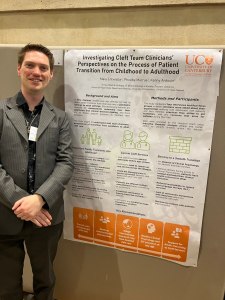
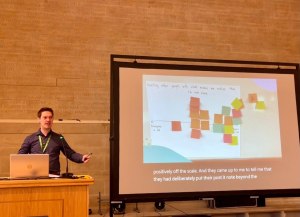
I thoroughly valued the opportunity to share some of my PhD research at this conference, both in the form of a poster presentation, and an oral presentation.
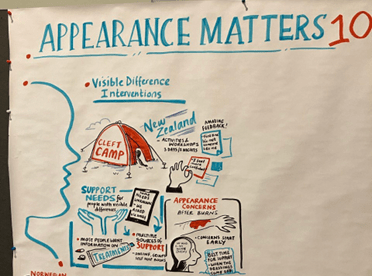
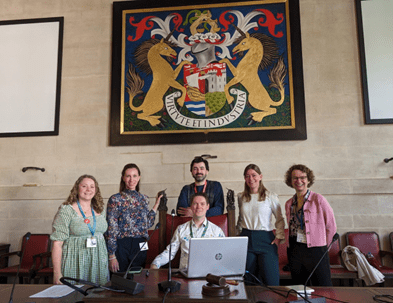
Another highlight of the AM10 Conference for me was the opportunity to be on the Scientific Committee for this conference and play a role in the selection of oral and poster presentations to be included in the programme. As part of this role, I had the opportunity to Chair one of the oral sessions – an excellent opportunity to deepen my understanding of the work happening within the broader visible difference realm.
European Cleft Palate Craniofacial Association (ECPCA) Congress – Tuesday 22-Friday 28 June 2024, Milan, Italy
Serendipitously, a bonus opportunity presented itself on this trip. The four-yearly pan-European cleft congress was taking place in Milan, Italy, the week after the AM10 conference. This congress attracted over 600 clinicians and was held over four days. Although the congress garnered extensive representation from across Europe, this congress also attracted colleagues from further afield, including the United States, Canada, Australia, New Zealand and more. The congress provided excellent opportunity to reconnect with colleagues from around the world, as well as establish new connections.
It was eye-opening to learn about the different structures and attitudes to cleft services across Europe and around the world. The Congress served as a good reminder of the importance of the work that is forming my PhD, but also of the challenges that may lie ahead with implementing that work broadly.
During this conference, I had the privilege of being the discussant for an international panel on “Walking the Talk: How do we deliver patient-centred care?” This was an excellent opportunity to facilitate discussion geared towards advancing patient-centred care across different countries, as well as varying medical and cultural contexts.
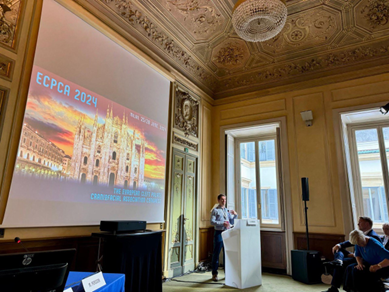
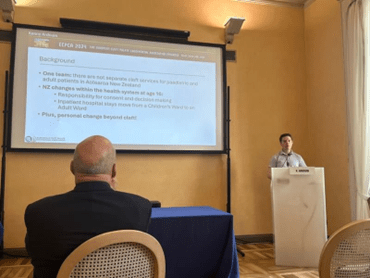
While at the ECPCA conference, I also had the opportunity to present a poster presentation on our hybrid Speech Language Therapy and Clinical Psychology clinic at UC, as well as an oral presentation on our work interviewing clinicians in Aotearoa to understand their perspective on how life changes for people with cleft when they reach the medical decision-making transition age of 16.
Research Centre Visit – Centre for Appearance Research – Monday 1-Friday 5 July 2024, Bristol, UK
A significant highlight of the trip was getting to spend most of my final week working with my external PhD supervisor, Associate Professor Nicola Stock, Research Psychologist at the Centre for Appearance Research. This was a rare opportunity to work together in the same room (on the same time zone) and was incredibly productive. Having collected the last of my data before heading away on the fellowship, we were able to progress with data analysis, analysing the quantitative and qualitative data from the Aotearoa Cleft Camp project.
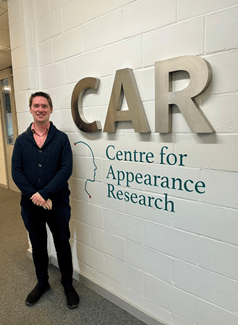
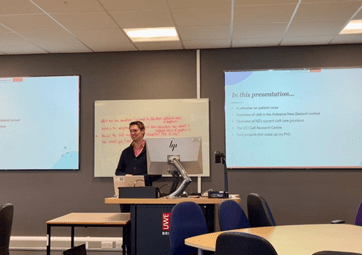
Another significant benefit of the lab visit to CAR was being able to meet with many members of the CAR team, share our work here in New Zealand with them, have the opportunity to ask questions of them (for example, around how to translate research findings into policy and societal change), and to give them the opportunity to increase their understanding of the Aotearoa New Zealand context. I am grateful to have been invited to present to the CAR team on Thursday 4 July about my PhD, and cleft in Aotearoa.
Summary
In summary, this fellowship has been an incredible opportunity for me both personally and professionally, and I am very thankful to the Claude McCarthy Fellowship grant, Royal Society of New Zealand Canterbury Branch, and the Centre for Appearance Research who have supported my attendance at these opportunities. I feel that I have come home feeling reenergised and encouraged in the work that we’re doing, and grateful for the opportunity to have connected with so many colleagues from so many countries around the world.
Discover more from Kenny Ardouin
Subscribe to get the latest posts sent to your email.

 Kenny Ardouin
Well done Kenny 😊
LikeLiked by 1 person